
When a tooth feels persistently sensitive or starts to ache without warning, it can be stressful to wonder what is going on and how quickly it needs to be addressed. Root canal therapy is a common restorative treatment designed to remove infection from inside a tooth, relieve symptoms, and preserve your natural tooth structure whenever possible. At Dental Spa of Orange, we take a calm, step-by-step approach so patients in Orange, CA feel informed, comfortable, and confident about their care.
What Is A Root Canal?
A root canal is a procedure that treats the inside of a tooth, known as the pulp. The pulp contains nerves and blood vessels, and it can become inflamed or infected due to deep decay, a crack, repeated dental work, or trauma. When this happens, the infection can spread and lead to worsening discomfort or an abscess if left untreated.
Root canal therapy focuses on:
- Removing the infected or inflamed pulp tissue.
- Cleaning and disinfecting the inner canals of the tooth.
- Sealing the tooth to reduce the risk of reinfection.
- Restoring the tooth so it can function comfortably again.
The goal is often to save the natural tooth rather than remove it. Preserving your tooth can support a stable bite, help prevent shifting, and maintain natural chewing efficiency.
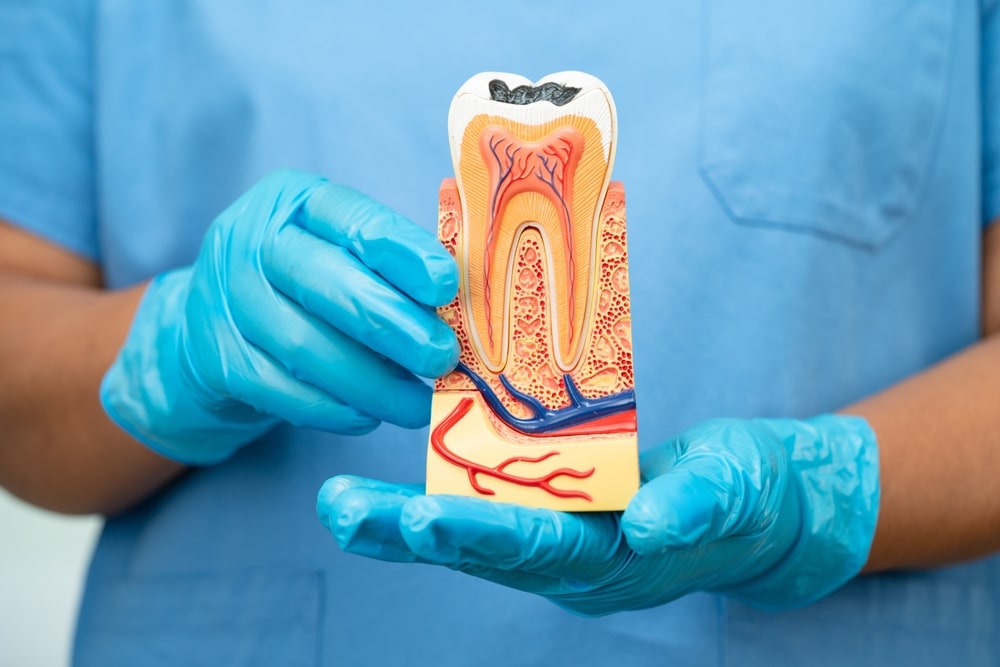
The Root Canal Process
Root canal therapy is typically completed in stages, with comfort and precision as top priorities. While each case is different, the process generally follows a clear path so you know what to expect.
Common steps may include:
- Evaluation: We examine the tooth, review symptoms, and take imaging to confirm the source of infection.
- Numbing: Local anesthesia is used to keep the area comfortable throughout the procedure.
- Access: A small opening is created to reach the inner portion of the tooth.
- Cleaning: The infected tissue is removed, and the canals are carefully cleaned and shaped.
- Disinfection: The inner space is disinfected to reduce bacteria and support healing.
- Filling and sealing: The canals are filled with a biocompatible material and sealed to help prevent reinfection.
- Restoration: A filling or crown is placed based on the tooth’s needs to restore strength and function.
After treatment, you may experience mild tenderness for a short time, especially if the tooth was inflamed beforehand. We provide guidance on what is normal, how to care for the area, and when to follow up.

Signs Of A Tooth Infection
Tooth infections do not always look the same from person to person. Some patients experience obvious symptoms, while others notice only subtle changes at first. If you suspect an infection, it is best to schedule an evaluation so we can determine what is happening and recommend the right next step.
Common signs of a tooth infection may include:
- Persistent toothache: Pain that lingers, worsens, or flares without a clear trigger.
- Sensitivity: Discomfort with hot or cold that lasts after the temperature is removed.
- Pain when chewing: Tenderness or pressure sensitivity when biting down.
- Swelling: Puffy or tender gums near the tooth, sometimes with facial swelling.
- Discoloration: A tooth that appears darker or grayish compared to neighboring teeth.
- Gum bump: A pimple-like spot on the gums that may drain fluid.
- Bad taste or odor: A lingering unpleasant taste or breath changes that do not improve with brushing.
If you have swelling, severe pain, or symptoms that intensify quickly, prompt evaluation is especially important.
The Importance Of Prompt Treatment
Treating an infected tooth sooner rather than later can protect your oral health and reduce the chance of complications. Infection inside a tooth does not typically resolve on its own. Without treatment, it may spread deeper into the surrounding bone and tissues, potentially leading to an abscess, increased swelling, or damage to nearby structures.
- Relieve symptoms more quickly and improve daily comfort.
- Preserve the natural tooth instead of requiring extraction.
- Reduce the risk of infection spreading beyond the tooth.
- Protect your bite by maintaining tooth position and alignment.
- Avoid more complex treatment needs that can develop over time.
In many cases, saving your natural tooth is the most conservative long-term option. After a root canal, we often recommend a crown to help protect the tooth from fracture, since a treated tooth can be more vulnerable to cracking under pressure.
- Strength: Protecting the tooth from breaking during normal chewing.
- Stability: Reinforcing a tooth that has lost structure due to decay or previous work.
- Longevity: Supporting a longer-lasting result by sealing and covering the tooth.
- Function: Helping the tooth feel comfortable and dependable in your bite.
Get Relief & Protect Your Natural Tooth
If you are dealing with persistent sensitivity, tooth pain, or signs of infection, you do not have to wait and hope it improves. Root canal therapy can relieve discomfort, stop the infection, and help you keep your natural tooth for years to come. Schedule an evaluation with Dental Spa of Orange to get clear answers and supportive care in Orange, CA.