
Canine teeth play an important role in both the appearance and function of your smile. They help guide the bite, support balanced chewing, and contribute to the natural shape of the smile line. When a canine tooth does not erupt into the proper position, it may become impacted, meaning it is trapped beneath the gums or bone and unable to come in normally. Impacted canines can lead to crowding, shifting, and even damage to nearby teeth if left untreated. At Dental Spa of Orange, we help patients in Orange, CA, understand impacted canine treatment options and coordinate care when orthodontics and oral surgery are needed.
What Are Impacted Canines
Impacted canines are canine teeth that have not erupted into the mouth as expected. Instead of breaking through the gums, the tooth remains under the gum tissue or bone. Canines are especially important because they are designed to support biting forces and help guide the jaw during side-to-side movement.
A canine may become impacted for several reasons, including:
- Lack of space in the arch due to crowding.
- Delayed loss of a baby tooth that blocks eruption.
- Eruption path issues where the tooth develops at an angle.
- Genetic factors that influence tooth positioning.
- Early trauma or developmental changes.
Impacted canines are more common in the upper jaw and may be discovered during routine exams when a canine tooth is missing from the smile line or when adult teeth do not seem to be erupting on schedule.

Why Early Diagnosis Matters
Early diagnosis can make impacted canine treatment more predictable and less complicated. When impacted canines are identified in childhood or early adolescence, treatment planning may be simpler because the tooth is still developing and the surrounding bone may be more responsive to guided movement.
- Improving the likelihood that the canine can be guided into position.
- Reducing the risk of damage to neighboring teeth.
- Preventing worsening crowding and bite imbalance.
- Supporting healthier bone and gum outcomes long term.
- A baby canine that does not loosen when expected.
- A noticeable gap where a canine should be.
- A canine that erupts high in the gumline or out of position.
- Swelling or tenderness near the canine area.
- Asymmetry in the way teeth are erupting on one side compared to the other.
Even when symptoms are not obvious, routine exams and imaging can reveal impacted teeth before complications develop.
Imaging & Surgical Exposure Techniques
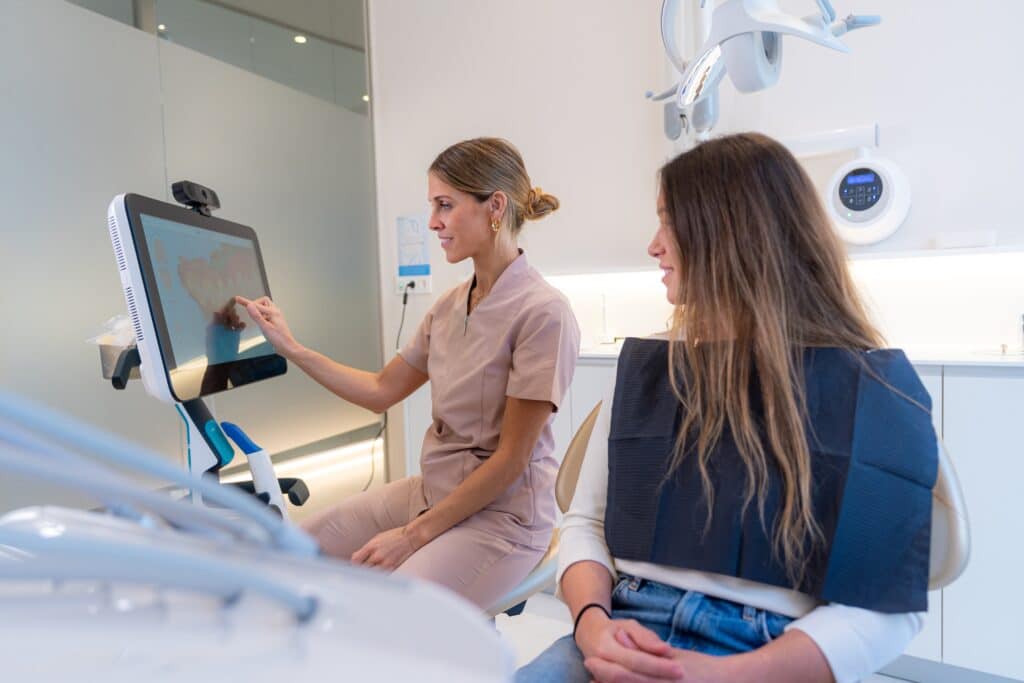
Imaging is essential for impacted canine evaluation because the tooth is often hidden beneath the gums. Digital imaging helps determine the exact position of the tooth, how close it is to neighboring roots, and what approach will best support treatment.
- The location and angle of the impacted canine.
- Whether the canine is close to adjacent tooth roots.
- Bone coverage around the tooth.
- The safest path for guided eruption.
When a canine is impacted, a common treatment approach is surgical exposure. This procedure gently uncovers the canine so it can be guided into place with orthodontic support.
- Creating access to the impacted tooth by lifting gum tissue.
- Exposing enough tooth structure to allow orthodontic attachment placement.
- Supporting a controlled eruption path guided by orthodontic forces.
- Coordinating healing to protect gum health and tooth stability.
- Tooth position: Whether the canine is angled or deeply embedded.
- Root proximity: The relationship to adjacent tooth roots and risk for root damage.
- Available space: Whether orthodontics is needed to create room for eruption.
- Age and development: Whether the tooth and bone are likely to respond well to treatment.
- Gum health: Ensuring tissues are stable for surgery and orthodontic movement.
Coordinating Orthodontics & Oral Surgery
Impacted canine treatment often requires teamwork. Orthodontics may be used to create space and guide the tooth into alignment, while oral surgery may be used to expose the tooth and allow orthodontic traction.
Coordination typically includes:
- Orthodontic planning to open space where the canine needs to erupt.
- Surgical exposure timed to support efficient tooth movement.
- Placement of an orthodontic attachment to guide eruption after exposure.
- Regular follow-ups to monitor movement and protect surrounding teeth.
This team approach matters because it helps ensure the canine is brought into place in a controlled way that supports both bite function and long-term stability.
Treatment Options For Adults & Teens
Treatment is often most straightforward in teens, but adults can still be treated successfully depending on tooth position, bone support, and overall oral health.
Treatment options may include:
- Orthodontic guidance: Creating space and guiding the canine into position using braces or clear aligners in some cases.
- Surgical exposure: Uncovering the canine so it can be moved into place.
- Extraction in specific cases: If the canine cannot be positioned predictably or presents high risk to adjacent teeth, other options may be discussed.
- Restorative alternatives: When a canine cannot be guided into place, replacement options may be considered depending on the situation.
We will explain which option fits best based on your imaging, goals, and long-term stability needs.

Recovery & Healing After Canine Exposure
After surgical exposure, healing is an important part of the process. Mild swelling and tenderness are common, and care instructions help protect the surgical site. Orthodontic guidance may begin soon after exposure, depending on the treatment plan.
Post-procedure recommendations may include:
- Manage swelling: Use cold compresses as directed during early recovery.
- Soft diet: Choose softer foods while tenderness improves.
- Gentle cleaning: Keep the area clean using the methods recommended by your dental team.
- Follow-up care: Attend scheduled visits to monitor healing and ensure orthodontic guidance stays on track.
- Avoid irritation: Avoid disturbing the area while tissues heal.
Healing varies by patient, and we will provide clear instructions so you know what to expect and when to contact the office.
Protecting Adjacent Teeth & Bone Health
One of the biggest concerns with impacted canines is their relationship to neighboring teeth. An impacted canine can press against nearby roots, which may contribute to root resorption or weakening if not addressed. That is why careful imaging, planning, and controlled movement are so important.
Treatment protects adjacent teeth and bone health by:
- Creating space so the canine can move without damaging other roots.
- Guiding movement gradually to reduce stress on nearby teeth.
- Monitoring progress regularly so changes are addressed early.
- Supporting healthy gums and bone during treatment.
Get Expert Guidance For Impacted Canines
Impacted canines are a complex issue, but with early diagnosis, precise imaging, and coordinated care, many patients can achieve a stable, healthy alignment. If you or your child has a missing canine, delayed eruption, or concerns about tooth development, our team is here to help. Schedule a consultation with Dental Spa of Orange to evaluate impacted canines and explore treatment planning in Orange, CA.