
If you want a straighter smile, healthier alignment, and improved bite function, traditional braces remain one of the most reliable orthodontic options available. Braces have helped millions of patients correct crowding, spacing, and bite concerns with predictable, structured tooth movement. Whether your case is mild or more complex, braces can create long-term improvements that support both confidence and oral health. At Dental Spa of Orange, we help patients in Orange, CA understand how traditional braces work, what to expect throughout treatment, and how to maintain results once braces come off.
What Are Traditional Braces?
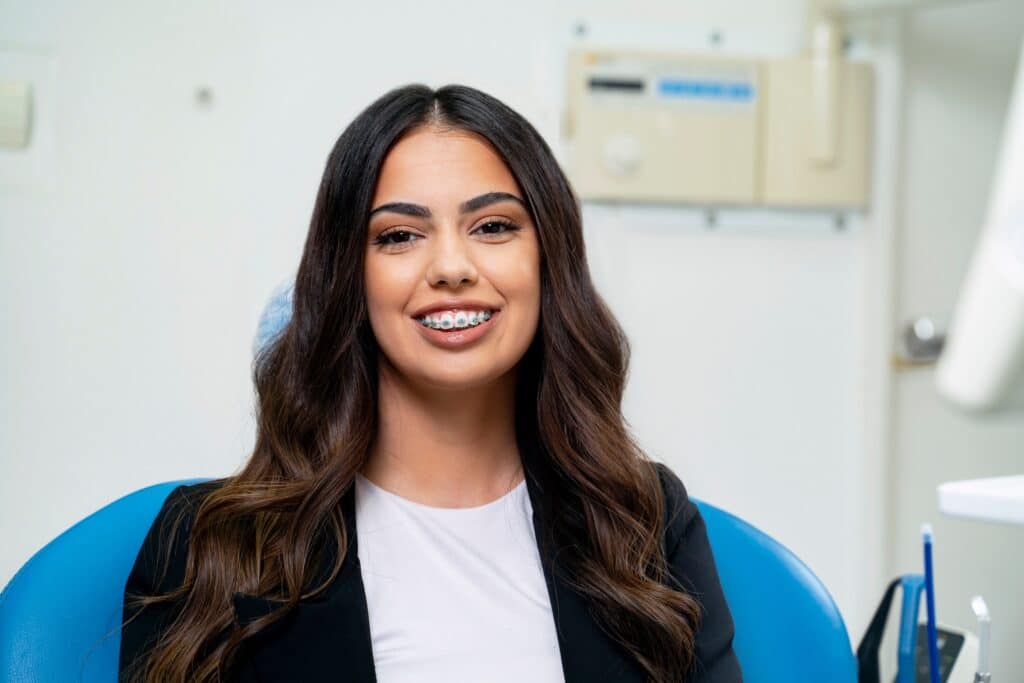
Traditional braces use a system of brackets and wires to guide teeth into better alignment over time. Brackets are bonded to the teeth and connected by a thin orthodontic wire that applies gentle, consistent pressure. As the wire is adjusted through regular visits, teeth move gradually into the planned positions.
Traditional braces are effective because they:
- Apply controlled force to move teeth in multiple directions.
- Allow precise adjustments at each stage of treatment.
- Can address a wide range of alignment and bite concerns.
- Do not rely on daily removal and reinsertion the way clear aligners do.
Braces can be used for both teens and adults and may be recommended when tooth movement requires more complex control.
Benefits Of Choosing Traditional Braces
Many patients choose braces because they deliver predictable results, especially for more involved orthodontic needs. While clear aligners are a great fit for some cases, braces can be the best option for patients who need more comprehensive correction.
Benefits of traditional braces may include:
- Reliable tooth movement: Braces provide continuous guidance without depending on wear-time compliance.
- Effective for complex cases: Braces can correct more significant crowding, rotation, and bite issues.
- Precise adjustments: Regular wire changes allow careful fine-tuning throughout treatment.
- Comprehensive correction: Braces can move teeth in ways that may be harder to achieve with removable trays.
- Long-term stability: With proper retention, braces can support durable alignment results.
Braces may also be a strong option for patients who prefer a fixed treatment that they do not have to remember to wear.

Ideal Candidates For Traditional Braces
Traditional braces can benefit a wide range of patients, but candidacy depends on oral health readiness, alignment goals, and the complexity of tooth movement needed. Before orthodontic treatment begins, it is important that gums are healthy and cavities are addressed, so teeth can move safely.
- Moderate to significant crowding that makes cleaning difficult.
- Gaps or spacing concerns that affect appearance or bite stability.
- Teeth that are rotated or misaligned in a way that needs precise control.
- Bite issues, such as overbite, underbite, crossbite, or open bite.
- A desire for a fixed orthodontic option that does not require daily aligner wear.
- A treatment plan that involves more complex tooth movement.
- Oral health: Gum stability and cavity risk before orthodontic treatment begins.
- Alignment goals: The type and amount of tooth movement needed.
- Bite function: How upper and lower teeth meet and whether correction is needed.
- Lifestyle needs: Comfort with a fixed appliance and willingness to follow care instructions.
- Long-term maintenance: Retention planning after braces to keep results stable.
If braces are not the best option for your goals, we will discuss alternative orthodontic approaches and help you choose a plan that fits your needs.
The Treatment Process With Traditional Braces
The braces process is structured and step-based, with regular visits to monitor progress and make adjustments. Treatment time varies by case complexity and can range from shorter-term correction to more comprehensive treatment plans.
The braces process often includes:
- Consultation and records: Evaluating alignment, bite, and oral health, and determining the best treatment direction.
- Treatment planning: Mapping out goals and expected movement stages.
- Bracket placement: Bonding brackets to teeth and placing the initial orthodontic wire.
- Adjustment visits: Tightening or changing wires at scheduled appointments to continue movement.
- Finishing details: Refining alignment and bite to reach the final planned result.
- Removal and retention: Removing braces and providing a retainer to help maintain results.
During treatment, you may feel pressure after adjustments, especially in the first few days. This is normal and typically improves as your mouth adapts. We also provide guidance on how to care for braces, including brushing techniques and how to avoid damage from certain foods.
Braces care recommendations often include:
- Brushing: Brushing thoroughly around brackets and along the gumline.
- Flossing: Using flossing aids to clean between teeth and under wires.
- Diet adjustments: Avoiding sticky or hard foods that may break brackets or wires.
- Protection: Using a mouthguard for sports to protect braces and teeth.
- Follow-up consistency: Keeping adjustment appointments so treatment stays on track.
Once braces are removed, retention is essential. Teeth can shift naturally over time, and a retainer helps protect your results while the surrounding tissues stabilize. We will explain when to wear your retainer, how to care for it, and how to maintain your new alignment long term.
Start Your Orthodontic Journey With Traditional Braces
A straighter smile can improve confidence, support easier cleaning, and create a healthier bite that feels more comfortable every day. Traditional braces remain a trusted option for predictable orthodontic correction, especially for more complex alignment needs. Schedule an orthodontic consultation with Dental Spa of Orange to learn more about traditional braces and begin your smile transformation in Orange, CA.